Demyelinating Marathons
What is Myelin?
Myelin is the substance that surrounds and enwraps axons in the central and peripheral nervous systems, providing electrical insulation and metabolic support to axons. The primary components of myelin are lipids, which make up 70–80% of myelin, whereas myelin proteins compact and stabilize its multilayered structure.
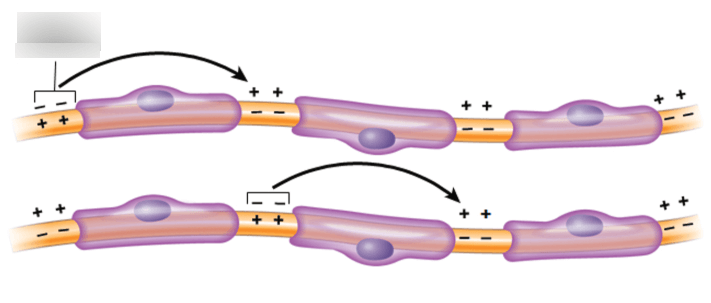
As it consists of lipids which are poor conductors, it helps in the phenomenon known as saltatory conduction (Latin for “jumping” conduction), which leads to an increased conduction speed in neurons, thus facilitating extremely fast propagation of impulses within the CNS.
Myelin and Marathons?
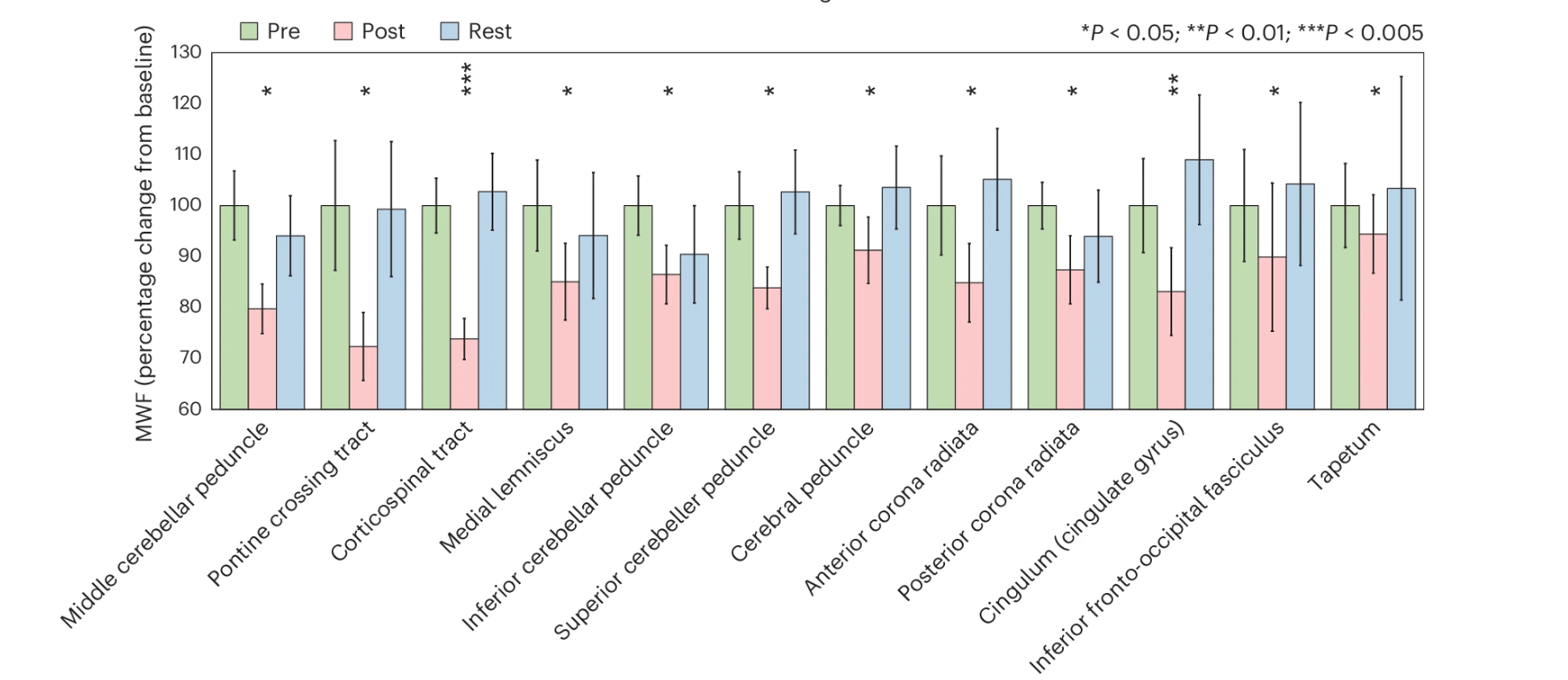
A recent study published in Nature Metabolism [1], found that athletes who ran marathons had reduced proportions of MWF (Myelin Water Fraction) in most white matter-containing parts of the brain. This study was conducted as an effort to see whether the brain uses myelin as fuel for neurons and glial cells when subjected to physical stress such as long distance running for prolonged periods of time.
The results were overwhelming, and showed a significant reduction in MWF (proxy marker for myelin content on MRIs) proportion in:
- Bilateral cortical white matter
- Pontine fibres
- Corticospinal tracts
Quantification of the changes illustrated that the MWF signal decreases significantly by up to:
- 28% in the pontine crossing
- 26% in the corticospinal tracts
A caveat to pay attention to is that MWF is the water trapped between the myelin lamellae, and one can argue that the results above can be attributed to dehydration. This explanation, however, does not explain the normal MWF levels in certain areas of the brain such as the Corpus Callosum and most of the grey matter, as one would expect a global decrease in MWF if it is due to dehydration.
Should you stop running then?
No! Running is considered to be one of the healthiest activities and is linked to a plethora of positive effects on:
- Cardiovascular system
- Central and peripheral nervous systems
- Respiratory system
- Gastrointestinal system
The decrease in MWF discussed above is recovered by the brain in 3–6 months post the long run (Here, “long runs” mean at least a full marathon). Further, no cognitive decline was noted in these athletes during the 3–6 months of myelin recovery.
In fact, researchers suspect that this recovery can serve as a sort of practice for the brain glial cells for further pathological demyelinating insults and thus can aid in preventing or reducing neurodegenerative issues in the future.
Other Nervous System Benefits of Running
Running not only increases the number of new neurons but also affects their inputs and synaptic plasticity. These modifications involve a complex and dynamic network of neurotransmitter systems that impinge onto the new neurons, including a previously unappreciated contribution of glutamatergic and cholinergic signaling, very early in their development.
The major areas studied with respect to benefits of running are:
- Hippocampus
- Prefrontal cortex
Multiple studies conducted on mice made to run on voluntary wheels have attempted to elicit the exact biochemical mechanisms behind the increase in memory and mood in regular runners.
12 days of voluntary wheel running increased dendritic spine number in medial prefrontal cortex cells and the expression of synaptic plasticity markers such as synaptophysin and PSD-95 in the prefrontal, orbitofrontal, and perirhinal cortex.
4 weeks of running in rats increases BDNF levels in the perirhinal cortex. Further, an increase in glial activity was noted in both the hippocampus and prefrontal cortex.
Other Benefits of Running
It has been seen that runners have a 25%-40% reduced risk of premature mortality and live approximately 3 years longer than non-runners. [2]
Running has been associated with a decreased incidence of coronary and large artery plaque formation, Myocardial infarction, acute cardiac events, stroke and transient ischemic attacks. Further, running has been associated with a decreased incidence of lifestyle disorders such as Type 2 Diabetes Mellitus, Obesity, Dyslipidemias and Irritable Bowel Syndrome among many others.
Running is even suggested as auxiliary therapy for depression and other psychiatric conditions by leading psychiatrists.

Take Away Message?
Inculcating the habit of medium-paced running or jogging at least 3–4 days per week will help in keeping your mood elevated and help in combating the stress that comes with the fast-paced modern lifestyle.
I hope that by listing all these benefits of running in a somewhat scientific way induces the thought of running as a constructional habit in your brain, motivates you to see it through, and make it a part of your lifestyle!
🎵 Blast your favorite track, 👟 tie your shoelaces and step out for an exhilarating run!
References
- Reversible reduction in brain myelin content after endurance exercise. Nat Metab (2025). source: doi.org
- Vivar C, van Praag H. Running changes the brain: the long and the short of it. Physiology. 2017 Nov;32(6):410-24.
- Lee DC, Brellenthin AG, Thompson PD, Sui X, Lee IM, Lavie CJ. Running as a key lifestyle medicine for longevity. Progress in cardiovascular diseases. 2017 Jul 1;60(1):45-55.
- Damrongthai C, Kuwamizu R, Suwabe K, Ochi G, Yamazaki Y, Fukuie T, Adachi K, Yassa MA, Churdchomjan W, Soya H. Benefit of human moderate running boosting mood and executive function coinciding with bilateral prefrontal activation. Scientific Reports. 2021 Nov 22;11(1):22657.
- Image Credit: Image 2 from “Reversible reduction in brain myelin content after endurance exercise”, Nat Metab (2025).
Written by:
 Amitesh
Content of this page is licensed under CC BY-NC 4.0.