Surgery without borders: Remote Robotic Surgery
A doctor in China conducted surgery on a patient 5,000 km away. The surgeon along with his colleagues at Shanghai Chest Hospital carried out a remote operation and removed a lung tumor using a domestically-made 5G surgical robot.
While the surgeon was in Shanghai, the patient and the surgical robot were in Kashgar of Xinjiang Autonomous Region (far West of China), which is approximately 5,000 km away. The surgery was performed on July 13 2024.
What is robotic surgery?
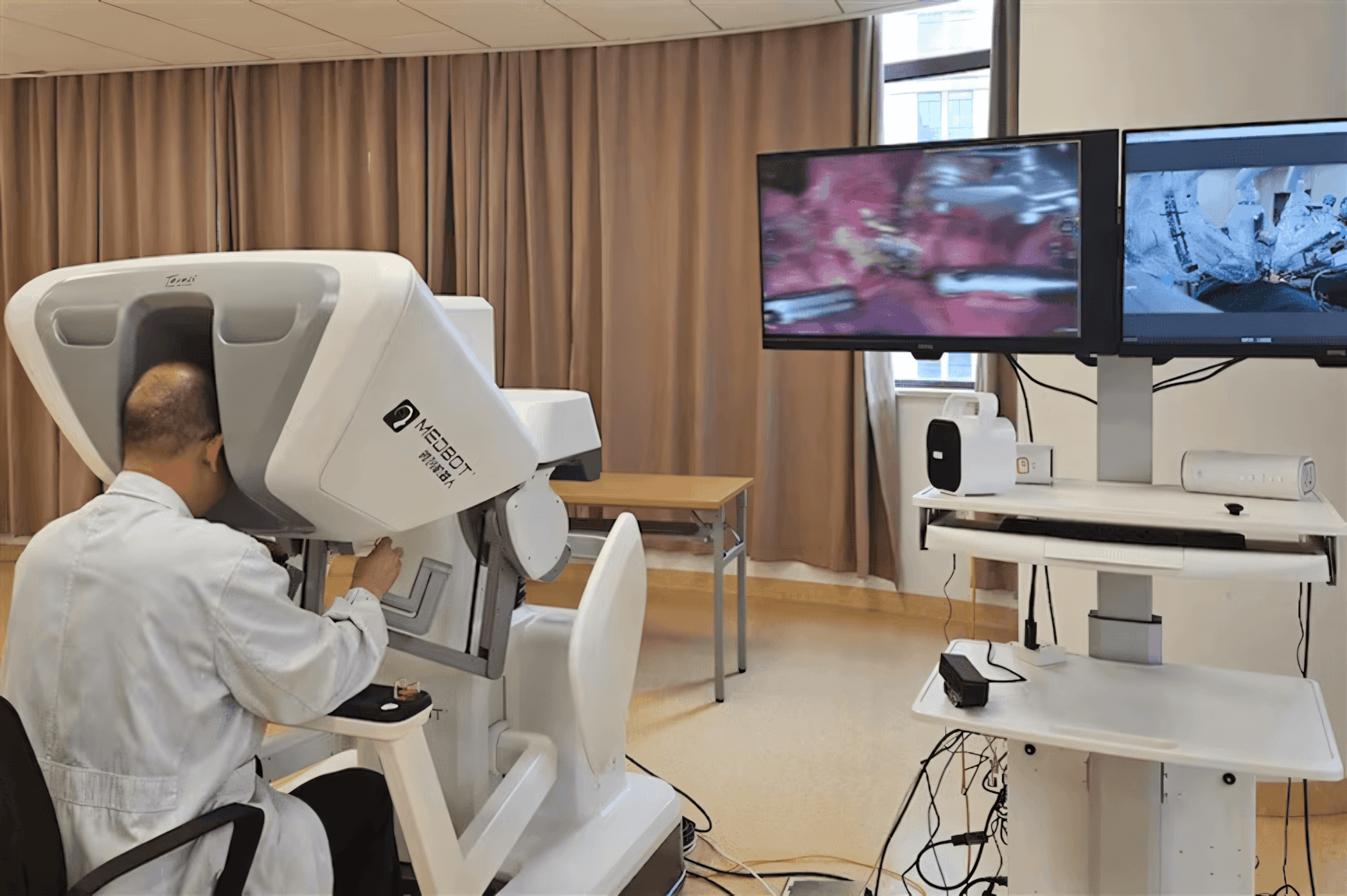
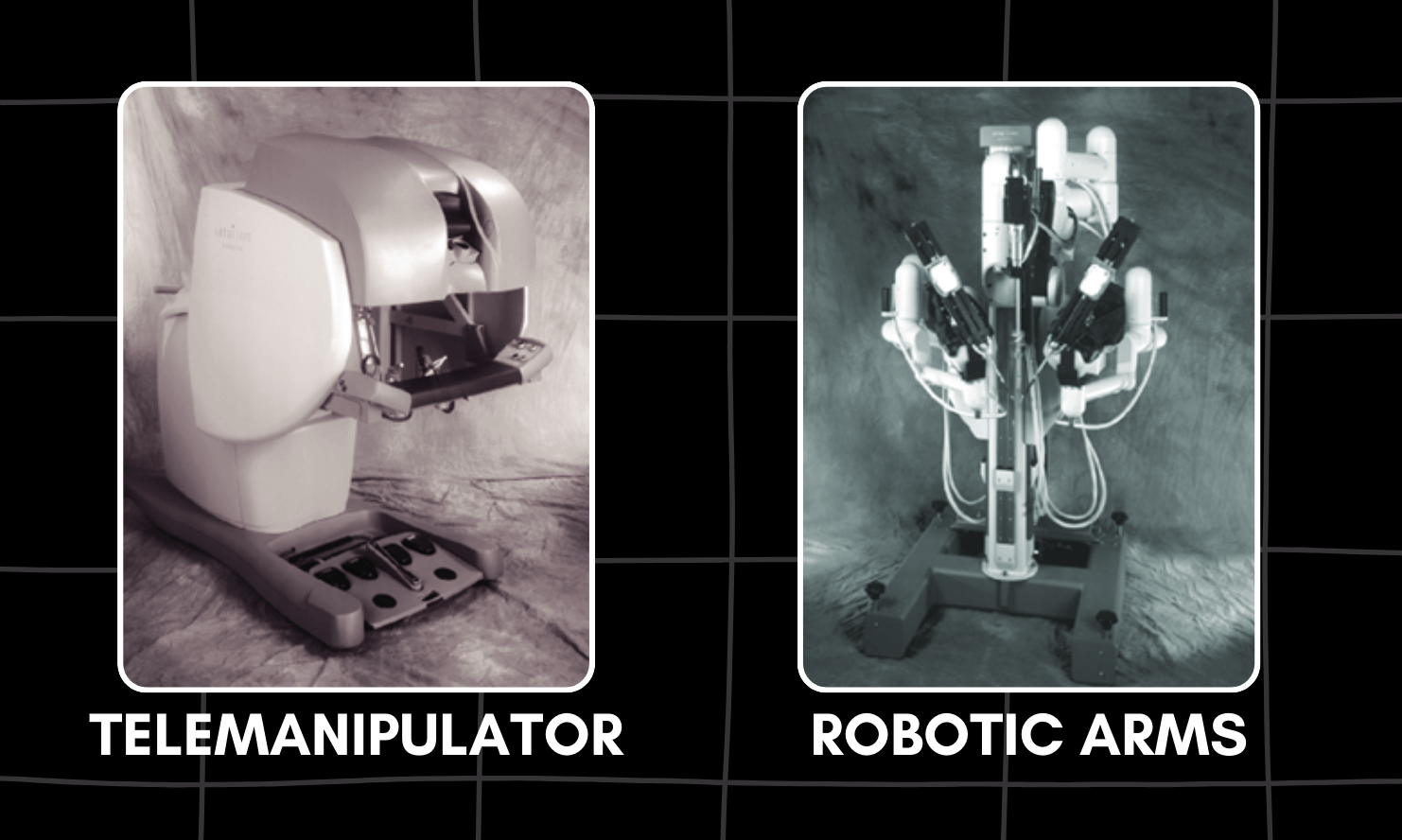
Robotic surgery is a further advancement in minimally invasive surgery where the surgeon controls robotic arms using a machine known as the ‘telemanipulator’. Robotic surgery works on a “Master and Slave” relationship, with the surgeon being the master and the robotic arms being the slaves. So how is this better than already existing laparoscopic techniques?
- Laparoscopic techniques offer a 2D view of the surgical field which leads to inappropriate depth perception and a steep learning curve for the surgeons to be able to perceive the depth with the help of a 2D view. Robotic Surgery offers a 3D view, thus providing better spatial awareness.
- Robotic wrists can rotate a whole 360 degrees thus offering much better manoeuvrability than human wrists. Physiological processes such as tremors that human hands might have, that may lead to errors are omitted.
- Robotic surgery is much more comfortable for the surgeon to perform, as the Da Vinci telemanipulator (name of the robotic set-up involved) is operated by the surgeon while sitting down in a comfortable and ergonomic position whereas in laparoscopic surgeries, the surgeon has to often stoop down and perform long surgeries while standing.
- Last but not the least, the advent of remote telesurgery has opened an all new avenue for surgeries that can now be performed from miles away.
Telesurgery
Telesurgery is nothing but robotic surgery where the telemanipulator is used by the surgeon to control robotic arms miles away. So, how are the two connected?
With the advent of 5G connection and network latency being at the lowest it has ever been, an action performed by the surgeon under the telemanipulator will be replicated by a robot thousands of miles away within 0.1 seconds max.
The use of 5G in telerobotics was demonstrated in a live screening of a surgery in spectacular fashion. The broadcast streamed a surgery being performed by a surgeon 10,000 miles away from the patient with latency and response time as low as a few 10s of milliseconds.
Some numerical perspective into how fast 5G used for telesurgery is:
- Network Latency: 10s-100s of ms
- Processing Latency: 1-10s of ms
- Haptic Interface Delay: 1-10s of ms
- Surgeon’s Reaction Time: 10s of ms
What does the future have in hold for us?
- Further advances in network connection will enable us to further increase the distance across which telesurgery can be conducted with a further decrease in latency and response time.
- New and upcoming machine learning programs can be used to pre-program robotic machinery to perform small surgeries thus taking out the need for active participation and requiring only passive observation and intervention when only necessary.
- Newer entrants are being released into the market every few months with a substantial reduction in size of the robots and decreasing costs of the same to improve the logistic (spatial and capital) constraints that robotic surgery has attached to it.
 Amitesh
 Dhiren Bhardwaj
Content of this page is licensed under CC BY-NC 4.0.